
Communities · 3 minute read
Repeated RG&E Outages: Build a Useful Record Before Filing a Claim
Track recurring outages, distinguish a reliability complaint from a reimbursement claim, and prepare safely for the next interruption.
The short answer
Report each outage and keep a dated log. Repeated short outages and one qualifying prolonged outage are not the same for reimbursement, so check RG&E’s current claim rules instead of adding separate interruptions together.
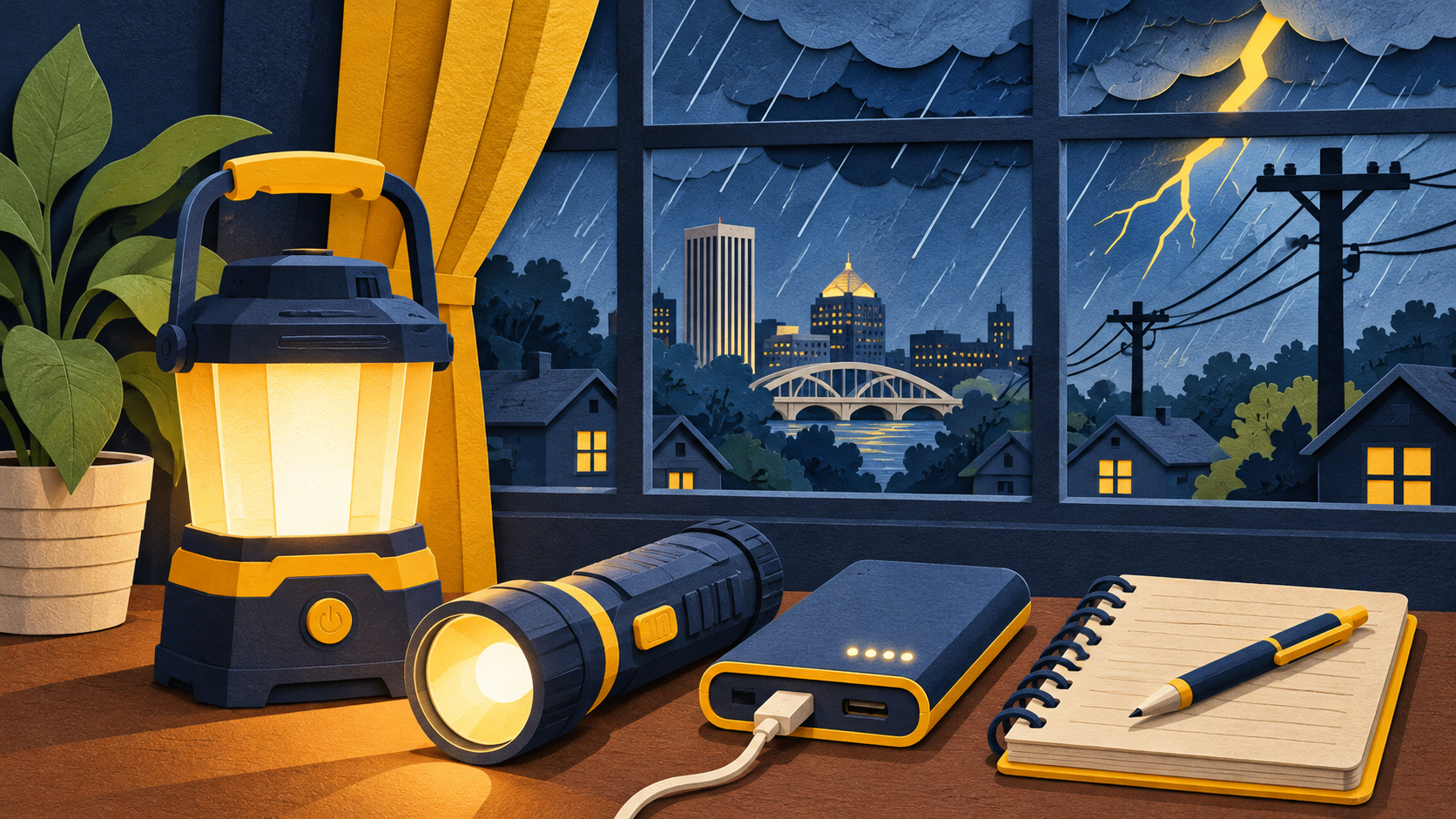
Original AI-created editorial illustration for Ellison Realty Services. Conceptual artwork, not an actual property, person, inspection or neighborhood safety assessment.
Count the events, but also record their duration
A Rochester resident reported repeated interruptions and food losses. The discussion raises a practical homeownership issue, but the post does not establish the cause of the outages or how the neighborhood compares nationally. Keep an event log with start and restoration times, the address affected, utility report numbers and whether nearby homes were also out. Save utility messages and photographs of any losses. A documented pattern is more useful in a service inquiry than an undated estimate of how often the lights went out.
A reliability complaint is different from a claim
Report an active outage directly to RG&E through its official channels. For a recurring-service concern, explain the pattern to the utility and request a response or case number. New York’s Department of Public Service directs customers to contact their utility first and offers a complaint process when the issue is unresolved. That route can address a service concern; it does not guarantee a cash payment or establish utility negligence.
Do not combine unrelated outages to reach a threshold
RG&E’s extended-outage program applies to qualifying widespread prolonged outages affecting at least 20,000 customers simultaneously. Spoilage reimbursement may apply after 72 consecutive hours without service. Residential automatic $25 bill credits begin at 96 consecutive hours, for qualifying 24-hour periods after the initial 72 hours. Several shorter interruptions do not simply add up to these thresholds. Ordinary damage claims are a separate process. Use the applicable official form and current instructions, preserve proof of loss and check deadlines promptly. Meeting a time threshold alone does not establish that every program condition is satisfied.
Plan for food and communication before the next outage
Keep refrigerator and freezer doors closed as much as possible during an outage and use federal food-safety guidance to decide what must be discarded. Do not taste food to judge its safety. Keep a battery-powered light, charged power bank and a way to receive utility updates. Record essential medical-equipment backup needs with the relevant care team and utility, without assuming enrollment guarantees uninterrupted power.
Backup power requires a safety plan
A portable generator is not an indoor appliance. CDC advises keeping generators outdoors at least 20 feet from doors, windows and vents. Never run one inside a home, basement or garage. Generator exhaust and improper connections can be deadly. Have a qualified electrician evaluate any connection to home wiring instead of improvising a backfeed arrangement. When comparing homes, ask about existing backup equipment and maintenance records, but do not treat an anecdotal outage report as proof of a neighborhood-wide reliability rating.
Further reading
Educational information, not legal, tax, lending or investment advice. Verify property-specific details and current requirements with qualified professionals.