
Communities · 3 minute read
A Neighbor's Tree Is Leaning Toward Your Home. Who Should You Contact?
An apparently vacant neighboring property still calls for a careful response. Prioritize safety, confirm ownership and arrange a professional tree-risk assessment.
The short answer
Keep away from immediate hazards, confirm the property owner and municipality, document concerns safely, and seek a qualified arborist's assessment before arranging work on someone else's tree.
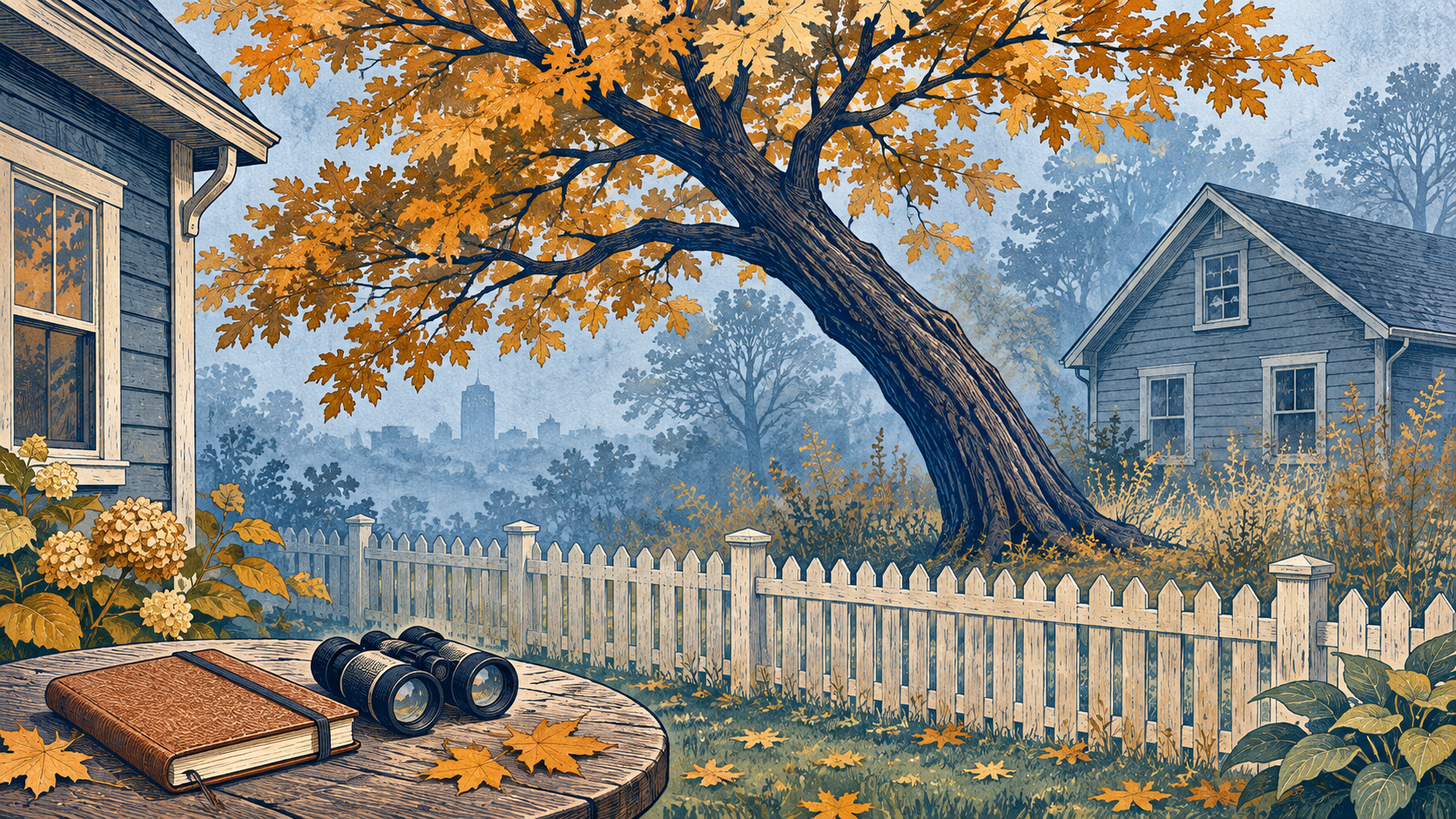
Original AI-created editorial illustration for Ellison Realty Services. Conceptual artwork, not an actual property, person, inspection or neighborhood safety assessment.
The local question
A Rochester-area homeowner asked what to do about a tree leaning toward their house from a neighboring property that appeared unoccupied. The situation calls for action, but a photograph and an unattended yard cannot establish the tree's condition, legal ownership or permission to remove it.
Put immediate safety first
If a tree appears to be actively failing or threatens people, keep everyone away and contact emergency services. Do not walk under hanging limbs or approach wires to inspect them. RG&E says downed lines and other electrical hazards should be reported at 800-743-1701, and warns that tree debris can conceal energized lines. For a concern that is not an immediate emergency, take dated photographs from a safe location on your property. Note any recent change, storm damage or visible cracking without trying to diagnose the tree yourself.
Verify who owns and manages the location
An empty-looking house is not evidence that nobody owns it. Use the appropriate public property records to identify the recorded owner and mailing contact. Within the City of Rochester, the city's property-data service includes ownership information. Confirm that you have the right parcel, and remember that an online map is not a boundary survey. Also confirm the municipality. A Rochester mailing address does not necessarily mean the property is inside the city. Contact the relevant city or town office to ask which department handles potentially hazardous trees on private land and what documentation it needs. Do not assume the municipality will remove a privately owned tree.
Ask for a professional assessment
A qualified arborist can assess the visible condition, explain the risk and recommend appropriate next steps. New York DEC recommends checking trees regularly, especially after storms, and leaving chainsaw work or work above ground level to professional tree-care services. Before paying for an assessment or removal proposal, explain that the trunk may be on another parcel. Clarify access, scope and any permission needed. Send the owner a factual written description of your concern and keep a copy. Do not enter the property or authorize removal based only on the assumption that it is abandoned.
Distinguish public trees from private trees
Rochester's Forestry Division maintains public trees along city streets and in other city spaces. Its service-request system can help with a public-tree concern, but that role should not be confused with automatic responsibility for a tree in a private yard. Ask your insurer what your policy says about potential damage and documentation. Coverage, preventive removal and liability are separate questions. If ownership, access or responsibility remains disputed, get advice from a New York attorney before cutting. A safe, documented assessment is more useful than an unsupported promise that someone else must pay. This article is not an arborist's assessment, insurance determination or legal advice.
Further reading
Educational information, not legal, tax, lending or investment advice. Verify property-specific details and current requirements with qualified professionals.